Mollie Burkhart’s mother-daughter relationship with Lizzie
Killers of the Flower MoonMollie Burkhart’s mother-daughter relationship with Lizzie was marked by deep attachment and an increasingly stark reversal of care. Lizzie had once feared that Mollie’s diabetes would take her young and asked her other children to look after her; instead, Mollie became the one who cared for the family. When Lizzie weakened after Anna Brown’s murder, Mollie fed her, sought help, and stayed beside her until she died. Their bond joined practical daily devotion to a shared world of belief, and its loss left Mollie grieving both her mother and one of her last living connections to older traditions.
Family Life and the Reversal of Care
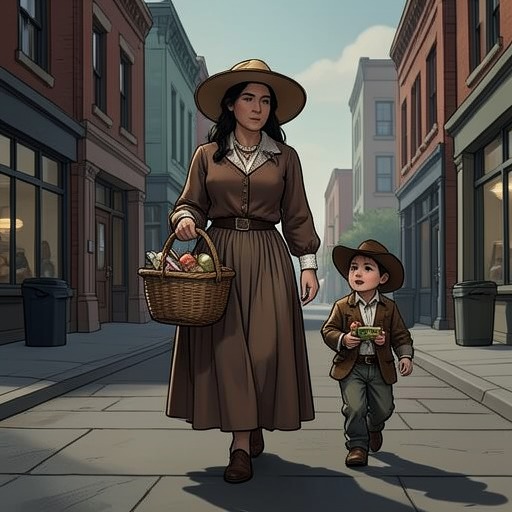
After Mollie’s father died, Lizzie moved into Mollie’s home. By 1921, Mollie was raising two small children—Elizabeth, age two, and James, eight months old, nicknamed Cowboy—while also tending to her aging mother. The household placed Mollie at the center of several generations’ needs. Her work was not merely a response to Lizzie’s later decline: she managed the home and cared for her children as well as her mother.
Lizzie’s earlier fear for Mollie makes that care especially striking. Because Mollie had diabetes, Lizzie had worried that her daughter might die young and had urged her other children to care for her. The expected direction of support was reversed. In the account’s pointed formulation, Mollie was the one who looked after all of them. The relationship is thus presented through acts of responsibility rather than through declarations: the adult daughter’s attention to the mother who had once feared for her.
On May 21, while Mollie was preparing a luncheon, Lizzie was too ill to leave her bed. Mollie asked Ernest Burkhart to call Anna Brown and see whether she would come help tend to their mother. Anna, the eldest child, held a special place in Lizzie’s affections; despite Mollie’s care, Anna was the daughter Lizzie spoiled. The scene makes visible both Mollie’s continuing responsibility and the family’s distinct emotional roles. Mollie arranged the help, while Lizzie’s preference for Anna remained part of the household’s intimate history.
Shared Beliefs and Anna’s Death
Mollie’s family practiced a mixture of Osage and Catholic beliefs, while Lizzie held firmly to traditional Osage belief. After Anna was found dead, an earring recovered from her body was brought to Lizzie, who recognized it immediately. The object confirmed what the family feared: Anna was dead. The narrative places that recognition within Lizzie’s understanding of Wah’Kon-Tah, the mysterious life force that pervades the natural world and around which the Osage had ordered their lives. Anna, Lizzie’s oldest and most favored daughter, had been taken before her time; Lizzie’s health worsened as grief deepened.
Mollie’s own grief and her care for Lizzie unfolded together. She organized Anna’s funeral, while Ernest comforted her; Lizzie, meanwhile, was too ill to attend to the practical demands of the loss. The deaths and mourning therefore altered the mother-daughter relationship without displacing its central pattern: Mollie continued to act for her mother as the family’s losses gathered around them. Lizzie’s spiritual understanding gave those losses a meaning rooted in her traditions, even as Mollie’s family life also encompassed Catholic belief.
Lizzie’s Decline and Mollie’s Vigil
By July 1921, Lizzie had grown progressively weaker, seeming to drift away and suffer a wasting illness like the one that had consumed Minnie. Mollie turned for help to Osage medicine men, who chanted at dawn, and to the Shoun Brothers, whose medicines came in black bags. Neither approach appeared to help. The contrast between the two kinds of treatment shows Mollie reaching across the forms of healing available to her, without evidence that she abandoned either tradition.
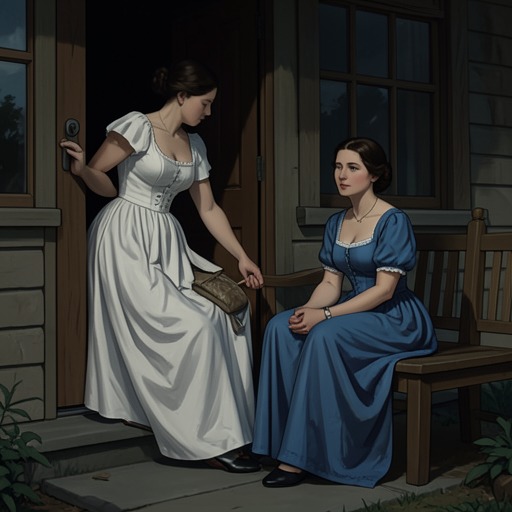
What remained possible was care at close range. Mollie kept vigil, fed Lizzie, and brushed her mother’s long, silvery hair from her face. The narrative describes Lizzie’s lined, expressive face as retaining its aura, preserving her presence even as illness made her seem increasingly insubstantial. These small acts give the relationship its clearest final shape: Mollie could not cure her mother, but she could remain beside her and tend to her body.
One day that July, less than two months after Anna’s murder, Lizzie stopped breathing. Mollie could not revive her. The account presents Lizzie’s spirit as claimed both by Jesus Christ and by Wah’Kon-Tah, reflecting the family’s mixed religious world rather than reducing her death to a single tradition. Mollie was overwhelmed by grief; a mourning prayer gives voice to that continuing sorrow. With Lizzie’s death, Mollie lost her mother and one of the last tethers to the tribe’s ancient way of life.
Suspicion After Her Death
Lizzie’s death also became a source of suspicion. Bill Smith, Mollie’s brother-in-law, questioned how she could have died so soon after Anna Brown and Charles Whitehorn. He had already been frustrated by the authorities’ investigation and began looking into the deaths himself. Like Mollie, he had seen that Lizzie’s illness was vague: no doctor had identified its cause, and no natural cause of death had been established.
As Bill consulted doctors and local investigators, he became convinced that Lizzie had been poisoned and that the three deaths were connected to the Osage’s oil wealth. This was Bill’s conclusion, not a proven finding. Its place in the account nevertheless changes the meaning of Mollie’s caregiving: the mother she had watched fade away might not have died from an ordinary illness. The narrative leaves that possibility as an accusation under investigation, while the emotional fact is settled—Mollie had cared for Lizzie through her decline and was left to mourn her after Anna’s murder.